
It’s Movember: “Changing The Face Of Men’s Health”

IT’S MOVEMBER: “CHANGING THE FACE OF MEN’S HEALTH”

It’s November which means it’s time to take down your Halloween decorations while munching away on your kid’s Halloween candy and feeling the guilt afterwards when you finally realize just how many mini chocolate bars you can actually eat in one sitting.  It’s also the time of year when the sights and sounds of the upcoming holiday season begin to make way and lastly, it’s that time of year for men all around the world to start growing a moustache in honour of men everywhere.

Movember began almost 15 years ago to raise awareness of men’s health issues such as Prostate Cancer, Testicular Cancer and Depression/Suicide with only one goal in mind which was and still is to “change the face of men’s health”.  As we watch our man’s moustache grow throughout the month of November we are simultaneously making way for conversations to occur which may have otherwise been left unsaid.

By inspiring men to get involved is helping increase the amount of lives being saved every year by reminding them of the importance of early cancer detection, making time for their annual check-ups, getting more active and essentially decreasing the amount of preventable deaths.

From a young age boys are taught how to “be a man”, how to act like a man and I truly believe that society is often the biggest influence on what a “real man” should look like, but I also believe that many traits may be inborn.  To act like a “real man” or to become a “real man” many young boys believe that they should never cry, they should never show fear and that they should never feel pain (all of which are sadly learned behaviours). But the truth is those are not actually the real men because a “real man” does cry, a “real man” will breakdown and a “real man” will suffer with mental illness and die by suicide.

This is why Movember is more important than ever because it is giving the “real men” the okay to feel secure enough not to mask or repress their vulnerable emotions underneath their moustache but to instead give them the power and strength to share their struggles and to ask for help when they need it.

Movember is helping to pave the way by slowly decreasing the stigma surrounding mental illness especially amongst men who statistically have the highest suicide rate in both age and gender alike.  The increase in awareness from campaigns like Movember are allowing men to want to take action to be both mentally and physically healthy by “changing the face of men’s health” one moustache at a time.
I’m Not Okay…But It’s Okay To Not Be Okay

I’M NOT OKAY…BUT IT’S OKAY TO NOT BE OKAY

*sensitive content*

I’ve been told many times before and I’ve also echoed the same sentiment many times before to others that it’s okay to not be okay when you are feeling overwhelmed, stressed out or vulnerable.  Being “okay” for some people may mean that they are somewhere in the middle of feeling fantastic and just trying to function. I use the word “okay” often to describe how I am feeling if asked because, let’s face it, it’s simply easier sometimes to casually answer “okay” rather than to be honest when you are feeling less than “okay”.  This of course comes from the stigma surrounding mental illness which makes many of us feel that showing our vulnerable side is a sign of great weakness, and let’s not forget that sometimes we believe (often through the actions and words of others) that maybe they really don’t want to hear that you are doing less than “okay”.

When I tell you that it’s okay to not be okay, I’m letting you know that it is more than okay to be honest about how you are really feeling without the shame and guilt that comes along with a person facing an overwhelming, stressful day or situation.  It’s okay to not always feel fantastic and it’s also more than okay if today and maybe tomorrow (or maybe even the day after that) you are unable to function or even pull yourself together enough for that day because today you feel tremendously helpless or even hopeless.

The last couple of weeks I have been trying to hold on tight to the phrase “it’s okay to not be okay” because I have been struggling way below the “okay” line.  I am mentally and emotionally exhausted and it’s causing me to have very vivid and unwanted thoughts, it’s causing my panic attacks to become more and more frequent and it’s causing an overwhelming sense of worthlessness and to be perfectly honest it is making me feel like a complete fraud.

I know “it’s okay to not be okay” because that’s what I would tell someone else when they come to me emotionally or mentally exhausted, panicked or feeling defeated.  I would tell them their feelings are valid, that it’s okay to cry, that it’s okay to feel angry, that it’s okay to get frustrated and that it’s okay to feel confused. All of these emotions are normal but for me they just stir up more feelings of guilt and more feelings of shame that I begin to feel that it’s NOT okay to not be okay, after all it’s been well over 4 years now that I have not been “okay”.

I feel like I no longer have the power or control over any part of my life and that doesn’t feel okay.  I feel like I can no longer justify my anger and I feel more frustrated and confused than ever and that doesn’t feel okay.  I know in my heart that my feelings and emotions are valid and that it’s best to be honest with myself and others in order to work through them because if I’m not able to be honest the consequences will become much worse.

If I’m not completely honest with myself and others then how will I ever work through the tears, the anger, the frustration and the confusion?  How will I ever be able to rid my mind of the guilt and the shame? How will I ever understand the depths of what it truly means when I say “it’s okay to not be okay”.  How can I believe right now that “it’s okay to not be okay”?

Is My Life Worth Living?

IS MY LIFE WORTH LIVING?

*May be triggering to some*

***Before you begin reading this please know that it’s probably the most truthful, most difficult words I have written to date. I’m not writing this for your sympathy or to scare you, I’m writing this because I need you to understand how real and scary this disease is for me and the millions of others suffering around the world***

This is a question I struggle with almost daily but most of the time they are passive thoughts.  I struggle with it when I’m anxiously lying awake late at night even though my home is peaceful and calm.  I struggle with it when I’m feeling an overwhelming sense of sadness during the day even when there is also peace and calmness surrounding me.

Recently I have been struggling a lot, recently I feel so much darkness encircling me and recently I find myself trying to answer that very question gnawing away at my insides; “Is my life worth living?”

I’m sure that if I did a poll right now the results would probably be pretty one-sided, possibly unanimous.  The answer that my depressed and anxious mind is so desperately trying to fight off, screaming so loud, almost deafening in my head would probably be refuted by both strangers and loved ones alike.  But you see, these emotions encompassing this question is like a big, fat ugly bully and his counterpart, you know, that devil who so cunningly sits on your shoulder relentlessly poking his horns in your ear while spewing out some pretty wicked dialogue.

They are telling me that I’m worthless (nothing I haven’t heard them say before) and that it’s hopeless because I’m unfixable (and if I’m gonna believe that then I probably also believe that the odds are in my favour to win the lottery next time it reaches 1.6 billion dollars too, well maybe if I lived in the States I could).  The big, fat ugly bully and his counterpart are also telling me that nothing matters, nothing at all because my illness holds all the power in my life. And they are persistently reminding me that I am a burden to my loved ones and that if I left this earth tomorrow they would all feel a sense of relief.

So does this mean that the big, fat ugly bully and his devilish little friend have given me the answer to my question?  Is my life worth living? This isn’t exactly the first time I’ve been on this merry-go-round. I have been on this ride so many times over the course of my journey; the ups, the downs and the constant feeling like I’m going to throw up as it just keeps turning around and around in circles like it’s never going to stop.

Being on the same ride over and over again makes it so easy to believe the endless utterances from that big, fat ugly bully and his ally. I never really liked the merry-go-round as a child, nor did I like it any more when I had to take my kids on them when they were little.  I mean have you seen some of those characters on those rides, they can be darn right spooky looking and who really enjoys feeling dizzy anyways?

What I want more than anything right now is to stop this merry-go-round from spinning me uncontrollably around and around in circles and in order to so I first need to find a way for that big, fat ugly bully to jump on the next ride, with his devilish little friend sitting on his shoulder relentlessly poking his evil horns in his ear instead of mine. That could be a life worth living for!

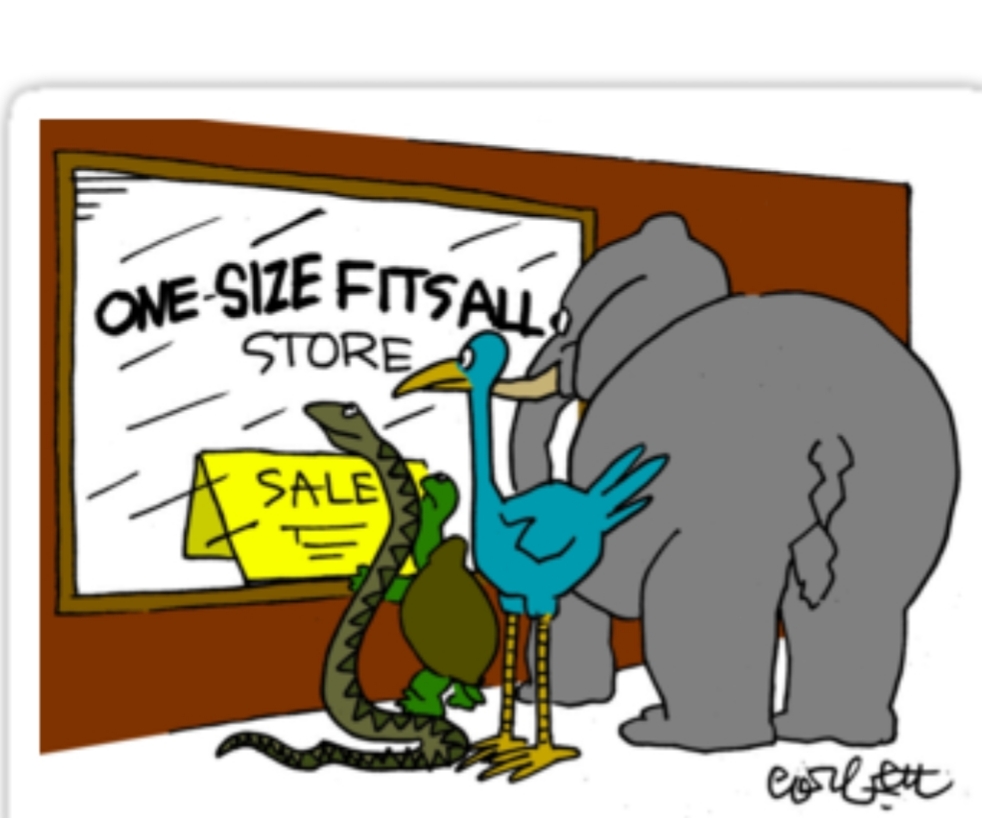
Depression Isn’t One Size Fits All: Situational Vs. Clinical Depression

DEPRESSION ISN’T ONE SIZE FITS ALL: SITUATIONAL VS. CLINICAL DEPRESSION

Depression comes in all different shapes and sizes.  It may look quite different from one person to the next and it can certainly feel very different too.  This is often why depression may be difficult to diagnose for some and why it may be even more difficult for others (especially their loved ones), to fully accept or acknowledge their battle with the disease.

Depression can be mild in form for some whereas for others (like myself) it can be more severe.  It can occur for a brief period of time in someone’s life or it can also last years for others (like myself). Depression may also be triggered by exceptional situations or environmental circumstances like the change of seasons, the death of a loved one or even something as joyous as the birth of their child.  But whatever the underlying reason may be, having a proper diagnosis is the first step toward helping someone no matter how big or small their crusade may be.

Even though there are so many different types of depression, for example: Major Depression, Bipolar Depression, PTSD (Post-Traumatic Stress Disorder), Postpartum Depression and Seasonal Affective Disorder just to name a few, most can be separated into two categories; Situational Depression and Clinical Depression.  And although there may be many similar attributes to them, it’s important to note that they all need to be approached and remedied in their own unique way because EACH and EVERY single diagnosis is real, EACH and EVERY single person is special and EACH and EVERY situation can pose a significant amount of danger to someone’s well-being.

Situational Depression which is also medically known as “Adjustment Disorder With Depressed Mood” is most often triggered by just that; a situation and is therefore usually more short-term.  It may transpire due to a divorce, the loss of a job, the death of a loved one or friend, a serious accident or other major life changes including retirement or even by becoming an empty nester.  Many of these situations can very often be supported by time and acceptance as well as a willingness to be as open and honest as possible with others about their feelings through the assistance of loved ones or a therapist.

Clinical Depression on the other hand can often be more severe and take a lot more than just time and acceptance to battle through.  I know this to be true as I was diagnosed four years ago with Clinical Depression, also referred to as Major Depressive Disorder. Since then it has interfered greatly in my daily life and continues to affect my thought process as well.  It is also most often due to a chemical imbalance in one’s brain that when supported by medication and/or therapy can help to manage the symptoms.

I no longer take medication (but my journey is not your journey) as it made many of my symptoms worse and also led to a diagnosis of Treatment Resistant Depression that I have touched upon in previous blogs and plan to talk about again soon.  But in the meantime with the help of my wonderful, patient and very accepting therapist I continue to search for other ways to battle through my persistent and very unrelenting illness.

Thinking “Happy Socks” Can’t Cure MY Depression

THINKING “HAPPY SOCKS” CAN’T CURE MY DEPRESSION

For anyone who follows me on social media you probably know by now that over the past week I have been selling “happy socks” and I have sold A LOT of them.  There are so many happy feet running, jogging and strutting their stuff around the city as we speak, more than I could have ever imagined; like hundreds of them and let me start by saying that I truly am grateful that I was given the opportunity to do so.  Who would have ever thought that socks could be all the rage or that people would be messaging me at all hours of the night for socks or that they would be lining up outside my front door just to get a deal on socks.

But you see these are not just any ordinary socks, these are also a stylish and sometimes bold fashion statement which will add a sparkle of self-expression to any outfit.  They can be worn for just about every occasion; just ask our Prime Minister who can be seen sporting them around the world at every public event he attends (I may have just lost a lot of sales by pointing that out!).  I bet he even owns a pair with Cannabis leaves on them in celebration of this week’s legalization of marijuana. Well either way, whatever your style is, I’m sure there is a pair (or 10) of happy socks that will fit your personality.

My husband has also hopped on the happy socks bandwagon and can’t get enough of them.  He excitedly chooses his outfits each morning depending on which pair of socks he feels like wearing that day.  That’s what happy socks do, they make people feel happy and it makes me feel happy knowing that I have helped make someone else feel happy.

The problem is though it can’t cure my depression or anxiety and to be perfectly honest, the entire process of selling happy socks (along with all of the other products I have sold over the past 4 years) is extremely overwhelming for me.  I have experienced a heightened sense of panic and anxiety this week which has boiled over into other parts of my life as well only leading to injurious feelings of depression.

I’m pretty sure some people reading this may wonder what could possibly cause me to feel the way I am from selling socks but many individuals may not realize what else goes into the preparation and delivery of them, the set-up of displays and the ongoing need to restock, the having to answer 100’s of messages (not to mention the countless dumbass questions I get from total strangers), the frequent amount of people coming and going from my home (which in itself has caused several on the spot panic attacks) and the mess encompassing my dining room with boxes upon boxes of socks everywhere.

For many individuals looking on from the outside in may feel this is a great opportunity for me, it keeps me busy and earning a bit of pocket money which should make me happy and if I would only think happy thoughts, if I would only feel happy emotions, if I would only just choose to be happy then I will feel better.  What many people don’t quite understand about depression is that it is not a choice. I did not choose to become depressed just like I would not choose to have Cancer and thinking that if I just chose to feel happy or if I just chose to think happy thoughts that I could heal my depression which can be very detrimental to the healing process and lets face it, if it was truly that easy there would be no such thing as depression.

I make choices every day in regards to my Mental Wellness.  I choose to create healthy boundaries which is not always easy, I choose to communicate my thoughts and feelings even though it may be uncomfortable and embarrassing and I choose “me” even when the guilt is too overwhelming.   So even if I can’t just choose happiness I can choose to continue to create those healthy boundaries, I can choose to continue to communicate my most intimate thoughts and feelings and I can also choose “me” which combined may one day allow me to “knock the socks” right off of this cruel and ferocious disease.

Social Anxiety: A Thanksgiving Weekend To Remember

SOCIAL ANXIETY: A THANKSGIVING WEEKEND TO REMEMBER

This past weekend was definitely a long one, both literally and figuratively. Not only was it actually a long weekend due to the Thanksgiving holiday (in Canada) but my social calendar was completely jam packed from dinner-time Friday night right through til dinner-time Monday night. The weekend was filled with celebration after celebration which included both family & friends. Sounds pretty magical doesn’t it? Well it would be for anyone not suffering from a social anxiety disorder.

Unless you struggle with a social anxiety disorder like I do I’m pretty certain you may not fully grasp the depths of my anguish and tribulation that come along with it and lets not forget how much effort it takes to get through. I have had some of these events from this past weekend on my calendar for weeks, if not months and if you think that helps, well unfortunately it doesn’t. It actually causes me more apprehension, more trepidation, more worry and more fear which gives me more time to anticipate, stress about and panic over.

The discomfort associated when struggling with such a condition goes far beyond just feeling awkward in social settings and like every other aspect of my mental illness, I just need you to know that I do not choose to feel this way as irrational as it may seem to many people and statistics show that social anxiety is now among one of the most common of all the mental disorders combined. Many people from time to time feel uncomfortable or nervous in social situations but when the stress of the situation goes above and beyond your normal comfort zone it can become very overwhelming.

There are many ways that having social anxiety can rear its ugly head and each individual’s situation may be different. For me it’s honestly just as simple as having to be around people (which can be extremely difficult to bypass, even as I continue to try and avoid going to many popular hotspots in and around my community), it’s having to engage in simple conversation, it’s having to enter a room filled with people whether I know them or not, it’s feeling like I don’t belong, it’s feeling like people are staring at me or judging me and it’s wishing that I could just blend in with the furniture.

I did survive this very long Thanksgiving weekend but not without experiencing every symptom associated with social anxiety at some point during the weekend. Many of the symptoms and emotions included severe heart palpitations (all day, every day), hesitation, nausea, headaches (which could have very well been due to the crappy, rainy weather or drinking alcohol which I avoided as much as possible for many reasons), shortness of breath (imagine you are drowning and trying to keep your head above the water as you intensely gasp for your next breath), irrational thoughts, crying and restlessness.

Having social anxiety can be just as frustrating and infuriating for your loved ones as it is for the individual itself who is suffering. My husband will firmly attest to this, especially on a weekend that he and my children were looking so forward to enjoying. I know it was not easy on him either this weekend (nor were the days preceding it; okay let’s be honest, nor have the last 4 years) having to continually shield me, protect me and accommodate my sudden outbursts and rollercoaster of emotions due to my social anxieties, most of which I tried to keep hidden behind closed doors, only adding more stress and pressure on him (I know you’re all thinking, he’s one lucky guy!).

Although this weekend was filled with many sudden outbursts and a rollercoaster of emotions and although I didn’t get to eat any turkey or pumpkin pie (actually I hate pumpkin pie so that’s okay), it was a thanksgiving weekend I will not soon forget. I was surrounded by genuine friendship, I was embraced by genuine hugs and I felt a genuine love and acceptance by so many and that is truly a lot to be thankful for.

*Please Read* The Stigma Is Killing Us *Please Read*

*PLEASE READ* THE STIGMA IS KILLING US *PLEASE READ*
*Sensitive Content*

Okay, I’ll admit we have come a long way in the last 10 years pertaining to the stigma surrounding Mental Illness but it’s not nearly enough and there has been way too much proof of that in recent weeks and months. I’m pretty sure that anyone who has ever suffered with a Mental Illness (both past and present day) has placed blame upon themselves for getting sick (myself included) because of the ignorance and irresponsibility of others. I’m also pretty sure that those same people have dealt with name calling and even been told that if they just try harder it would all go away (myself included).

One thing I do know for sure is that by having to endure these misconceptions brought about by society will lead many individuals to feeling ashamed and embarrassed for something that is not in their control (myself included), not to mention feeling like a burden to their loved ones (myself included) and therefore many choose to just suffer in silence instead.

According to the Mayo Clinic a “stigma is when someone views you in a negative way because you have a distinguishing characteristic or personal trait that’s thought to be, or actually is a disadvantage.” These negative stereotypes couldn’t be a more accurate definition of many people’s harmful perceptions and beliefs toward individuals living with a mental illness and guess what; we aren’t all deranged, vicious threats to society as the stigma has also empowered many to believe.

A Mental Illness stigma can lead to all sorts of discrimination, sometimes in an indirect way, but many times it is directed right at the individual, but either way, it is very damaging and can lead to worsening symptoms. Often when the stigma is placed upon an individual suffering with a Mental Illness they feel an unwillingness to seek proper treatment for fear of being judged or excluded especially when there is a strong lack of understanding from family and friends.

Although I have become a strong voice in the fight to end the stigma surrounding Mental Illness, I still live with the warped perception brought upon by the ignorance of many people in society. It often leads me to feel ashamed, embarrassed and like a complete failure even as I advocate for change. And even though I feel these emotions I have not allowed it to stop me from continuing to advocate for change by speaking my reality, by allowing you into my most intimate thoughts and by educating others through my blogs and social media platforms.

What has kept me fighting is simply the fact that I now know that I have actually made a difference in so many lives, I have actually changed people’s lives, I have actually changed people’s perceptions surrounding Mental Illness and I have actually been shown so much gratitude and kindness from lives I have touched. Many of these individuals were too scared to ask for help before delving into my life and learning that it’s okay to not be okay and after speaking wholeheartedly with me have actually taken that first step toward helping themselves or a loved one.

I started off this article by telling you that although we have made great strides toward ending the Mental Illness stigma there is still a very long way to go. Last week I spoke of not one but two suicides which occurred right in my very own community and it was heartbreaking. What was even more heartbreaking was hearing that the system failed them, but the truth is, when someone who had been suffering in silence takes their own life, it is not the “system’s” fault, nor is it their loved one’s fault, the truth is it’s no one’s fault but the F*#@ING STIGMA. So who’s with me? Who’s ready for the greatest showdown ever? Who’s ready to stop the stigma from killing us?

It Takes A Village

IT TAKES A VILLAGE
*Sensitive Content*

Whenever I hear of someone dying by suicide I am quickly hit with a range of emotions that are very difficult to talk about. I have spoken many times about my emotions surrounding the death of a celebrity by suicide and how it pertains to my mental health, but when it takes place right in my own community, well that’s a whole other story which is exactly what happened this past week, twice.

For the majority of my life I have lived in a community that is particularly Jewish and it is also where I knew I wanted to raise my children so that they too would feel the same connection and familiarity as I always had. I also felt that in doing so my kids would feel a sense of belonging, a sense of support and a sense of comfort which I truly believe they do. While at the same time still ensuring that they know there is a whole other world outside of their community and that they learn from a young age the importance of being inclusive, being tolerant and being compassionate towards others.

When someone passes away it is always sad whether or not you know the person intimately or you hear about it through your community as it probably will have a great impact on many people you know. Either way it is difficult sometimes to know just what to say or how to react to their pain and sadness. Now imagine for a moment how you may feel when you learn that their loved one’s death was by suicide and the stigma that follows such a tragic and sudden death.

Their loved ones are not only left with the ‘normal’ pain and sadness related to their grief and loss but they are more than likely also facing a whole other range of emotions too. They are probably undergoing feelings of anger, guilt, shock & confusion as well as feelings of shame, judgment and alienation because of the stigma attached to suicide by society. If their loved one had died from a terminal illness, a tragic accident or even old age, they would not be left with a shadow cast upon their grieving process due to that same stigma.

They say that it takes a village to raise a child which to me is an analogy signifying the true importance of community. It reassures us that no matter what, we will always feel a sense of belonging, a sense of support and a sense of comfort. And when someone is grieving the loss of a loved one by suicide just knowing that they have an entire community assuring them that they do belong, that they are supported and that you are there to comfort them is the perfect way to help take the stigma out of the equation altogether.

But boy do I wish that it was that simple; that I could just snap my fingers and the stigma surrounding mental illness and suicide would be gone forever. To know that I wasn’t being judged or alienated anymore for my illness or that a loved one left behind after a suicide, who is filled with great pain and sadness, wouldn’t have to live with the added emotions of shame and guilt often brought about by society.

I am surrounded by a great community and so is my family, it’s that same great community I have lived in most of my life who have been providing me and my family with a sense of belonging, an overwhelming sense of support and a powerful sense of comfort but like any other community it’s still far from perfect. I can still see the intolerance, I can still hear the indifference and I can still feel the exclusion and it breaks my heart knowing what others have to endure too, which is why so many people choose to suffer in silence and why so many loved ones feel so alone. But it shouldn’t have to feel this way, not when you have an entire village behind you, not if each and every member of your village makes the change together.

What It’s Like To Feel Invisible: Validation Is Key

WHAT IT’S LIKE TO FEEL INVISIBLE: VALIDATION IS KEY

Living with an illness that is not visible to the naked eye is often very hard for many individuals to understand because let’s face it, “Seeing is Believing”. People are normally more able and willing to acquire something as true if they can actually physically see it for themselves. This way of thinking can and will turn an already burdensome situation for someone like myself into an even more isolating and difficult experience when we no longer feel accepted or supported.

If we are ever going to collectively move towards a stigma free society it needs to start with one key ingredient: Validation. Validation is learning to recognize and accept another person’s internal struggles as being real and in doing so you are communicating to the individual that you are there for them and that you care about their thoughts, emotions and experiences even if they may differ from your own. It also means that no matter who you are or what you are battling against that your feelings ARE valid, your pain IS valid and that your suffering IS valid too.

The truth is though that when suffering with an invisible illness as I do it is very easy for some people to make you feel invalidated and I see it more and more as the years pass by. I have felt abandoned, ignored and judged too many times to count, by people who can’t physically see my feelings, my pain or my suffering and therefore gather their own conclusions based on what they see from the outside looking in.

Sadly, based on these conclusions I sometimes find myself wishing that if I suffered from a more visible illness then I would feel more validated and more accepted. In order for some people to take an illness like depression or anxiety more seriously they need to see me at my worst to make it seem more credible or believable. Do I really wish I had to endure an illness that was more visible, probably not, but please just try and understand why I may feel this way?

You see, my outward appearance doesn’t always match my inward appearance and unless of course you have x-ray vision you can’t actually see what’s going on inside my brain making it so easy for others to assume that I look fine and therefore I must be feeling great. But unfortunately it’s not the case and it becomes quite frustrating at times and often hinders my recovery when I feel invalidated.

I know that it probably shouldn’t matter to me that some people may not understand that my illness is very real and very much controlled by a part of my body that is not visible to the naked eye, the part of the body which controls and affects the way we think, the way we feel and the way we behave, but it truly does. I only wish that instead of sometimes feeling that it would be easier to have a more visible illness, that society as a whole could instead learn acceptance, learn to believe in someone’s pain or internal struggles, learn to not make inconclusive assumptions and most of all learn that validating a loved one’s feelings can go a long, long way.

I’M PROUD TO BE JEWISH BUT I DON’T BELIEVE IN GOD

I’M PROUD TO BE JEWISH BUT I DON’T BELIEVE IN GOD
*Very Sensitive Content To Some*

This is the time of year in the Jewish Community, all around the world, religious or not, that we celebrate the Jewish New Year and I just want you to know that there is no right or wrong way to do so. I wrote a blog around the exact same time last year (Sept. 17, 2017) and made a bold confession to you all that I do not believe that God truly exists and to some of you reading this that may be a more difficult pill to swallow than actually trying to comprehend my mental illness itself.

Please don’t judge me when I tell you that I am very proud to be Jewish and that I am also very proud to raise my children Jewish but that I practice my religion and my beliefs for myself and my family and not for any God. I try to instill as many Jewish traditions and customs onto my children as I possibly can and knowing that they are all surrounded by a tremendous community of fellow Jews, I hope they too are just as proud.

I am pretty sure that even if you do believe in a God that at some point in your life you have been left questioning his or her existence too especially when faced with a challenge or a loss. Over the past four years my illness has caused many challenges for me and an immense feeling of loss. Depression challenges my ability to maintain relationships; it challenges my ability to work and to achieve my goals; it challenges my marriage and my ability to parent my children and it also challenges my ability to find the will to live every single day.

These challenges have in turn created a great sense of loss too as depression is like a thief who will stop at nothing to rob you blind. I have lost so many days, so many weeks, so many months and now so many years of my life; I have lost important relationships; I have lost my sense of self and after four very challenging years I really have lost all sense of hope and faith.

I have searched high and low for God, I have cried out to her, I have prayed to her and I have even thanked her out loud many, many times before, but whether it’s been while I am in search of God or through my tears, or in prayer or by showing my gratitude I have simply been met by complete silence. There are so many platitudes that could follow the awkward silence, ones I’m sure we’ve all heard so many times before when dealing with hardship, challenges or loss and it’s wonderful if it helps you get through these adversities but when I hear “God won’t give us more than we can handle”, “It’s God’s Will”, or even, “Why do bad things happen to good people” I pretty much want to cringe because how can we try to rationalize someone else’s pain and suffering or loss when being told that “Everything happens for a reason”?

Are natural disasters, terrorism, murder, losing a child or an illness that may or may not be terminal really “all part of God’s plan”? Maybe? But as the Jewish Community prepares to celebrate the holiest day of the year in the Jewish calendar this week I will continue to feel proud to be Jewish, I will continue to follow many of the Jewish traditions, I will continue to pass down many of the Jewish customs to my children and I will continue to look to my family and community to bring me comfort and help me find the meaning to my life.