
In just over a month from now, it will be 3 years since I took part in the Psilocybin (magic mushrooms) Clinical Research Trial (April 2, 2022) for treatment resistant depression, that, as most of you who follow me regularly know has left me battling life-altering neurological damage ever since.
I’ve made little to no progress in finding a solution to calm my nervous system down after convulsing for close to 6 hours straight during the treatment. To this day I still live with daily brain zaps, tics and spasms, numbness, constant tingling in my hands and feet, blurred vision, a severe aversion to noise and touch and an unrelenting, unbearable disorder known as PGAD. To top it off, I continue to live with my daily symptoms of depression and anxiety, too.
I made a promise to myself shortly after completing my Psilocybin trip, or nightmare as I now call it, that I will never again participate in any type of clinical study that involves trying new medicinal treatments, procedures, or doing anything that could in any way alter my mind or body.
I wholeheartedly still believe in the importance of research, though. I know it is imperative for “the advancement of science and is the foundation for medical progress by providing evidence-based data on new treatments through rigorous research on human subjects.”
So, instead, I have found other, less invasive ways to help science, and try, as much as I am able, to do my part to help others by participating in research projects over the past couple of years that won’t pose a risk or threat to my health, but are still just as important.
The most recent one, which is being spearheaded by my Psychiatrist and funded by the Ontario Brain Institute, is divided into 2 tiers. I started tier 1 several weeks ago whereby I participated in 5 or 6 hours of deeply personal clinical interviews and assessments, all of which were conducted on Zoom, one-on-one, with a clinical research study assistant, and broken up into smaller increments over a two week period to help make it easier for both my schedule and mental health.
The study itself is looking at ways to find the best matches and most effective treatment options for every individual person battling a mood disorder such as depression and bipolar disorder. The study will take 5 years to complete.
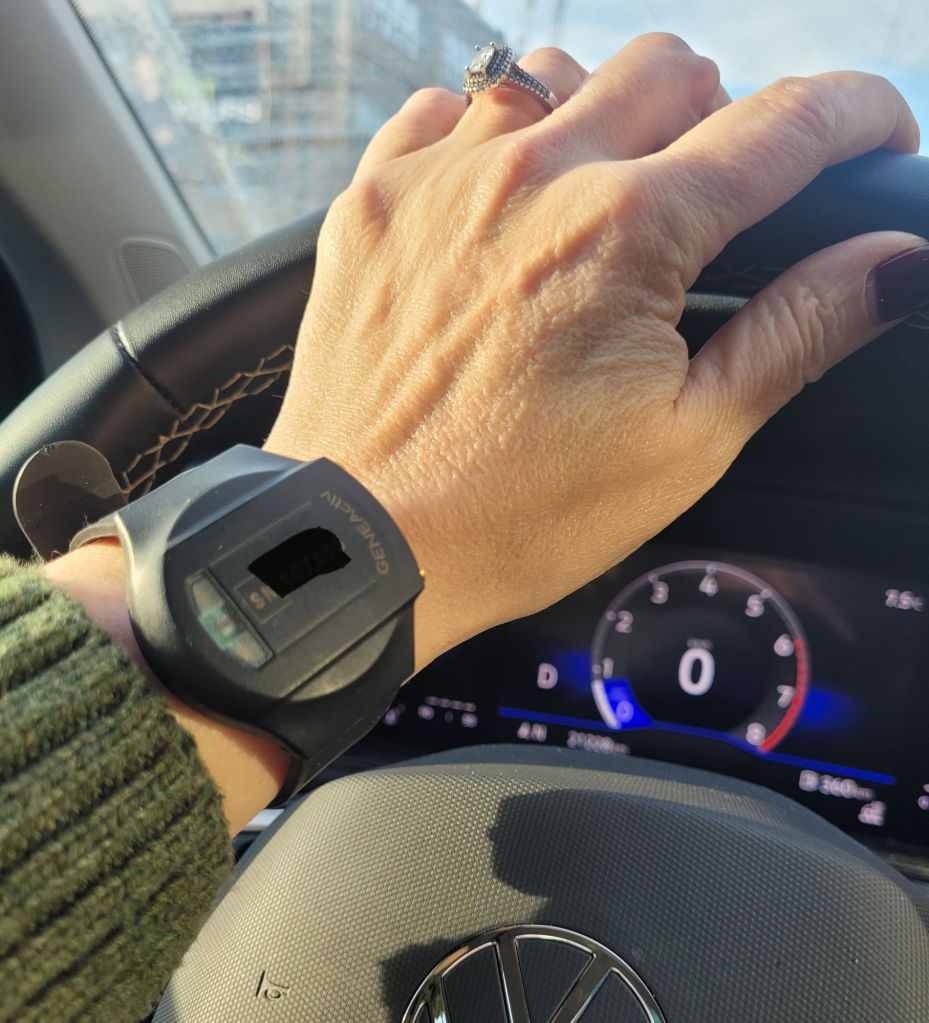
With “most areas of medicine, researchers are able to use ‘biomarkers’ or clinical tests, blood tests, or imaging to help diagnose and treat an illness.” Although there have been some advancements in the search for biomarkers in mood disorders, there are still many roadblocks in the way. This is where tier 2 of this study comes into play and why I spent this afternoon at the hospital where the study is being conducted doing a series of tests including undergoing an MRI, blood work (lots of it), an EEG and lastly, I was given an “actigraphy device” which I now need to wear on my wrist for the next 2 weeks.
The clinical research study assistant took me around to each of my appointments.
An actigraphy basically “measures your movement” and tracks both your sleep and activity cycles. This includes, but is not limited to, when you fall asleep, how long you sleep, how often you wake during the night, how much time you are awake during the day and other patterns as well.
Today took a lot out of me. Way more than I expected it to. By the time I headed home I was exhausted, headachy, and nauseous but I have done my part and now I am looking forward to discussing some of my results with my Psychiatrist as one of the many reasons I chose to take part in this study was my ever growing curiosity and our lengthy discussions in the past few years about having a scan of my brain done, to see if, maybe, my brain shows any identifiable markers or patterns commonly associated with depression. So, my mission was accomplished.
“Medical science has proven time and again that when the resources are provided, great progress in the treatment, cure, and prevention of disease can occur.”
Michael J. Fox
#researchstudy #actigraphy #mri #brainscan #forscience #treatmentresistantdepression #science #neuroscience #clinicaltrial #mentalhealth #biomarkers #missionaccomplished

 YouAreEnough